RMA reform update: Select Committee reports back
The Government’s proposed replacement for the Resource Management Act has taken another important step forward, with the Environment Select Committee now having reported back on the Planning Bill and Natural Environment Bill.
After considering thousands of submissions, the Committee has recommended a number of amendments, but the overall shape of the reforms remains much the same. The legislation is still some way from being finalised, but this report gives us a much clearer indication of where the future planning system is headed.
What has been recommended?
The Committee has supported a number of the key features of the reform package, including:
• Keeping the proposed two-Act structure, with planning and development separated from natural environment management.
• Continuing the stronger focus on enabling housing, infrastructure and economic development, while still protecting environmental outcomes.
• Retaining the proposed regulatory relief framework for landowners who are significantly affected by planning restrictions.
• Making it harder for councils to reject private plan changes without properly considering them on their merits.
• Removing the proposed market-based allocation system for freshwater and other natural resources.
• Extending the transition period, with full implementation now expected to run through to around 2031.
• Refining regional spatial planning and improving the way the two new Acts will work together.
• Making a number of technical changes to improve how the legislation will operate in practice.
The report also confirms that several of the bigger policy shifts are still very much part of the reform package, including environmental limits, regional spatial planning, stronger national direction and a more development-enabling planning system.
What this means in practice
While the legislation is still moving through Parliament, this report gives a strong indication of the direction of travel.
For developers, the reforms point to a more enabling approach to housing, growth and economic development, along with changes to plan-making processes that may make private plan changes more accessible.
For infrastructure providers, there is likely to be greater emphasis on nationally significant infrastructure and more consistent national direction, although the detail will still depend on the standards and regulations yet to come.
For landowners, the regulatory relief provisions remain one of the most significant parts of the reform package. If they are enacted, they could provide new options where planning rules place major restrictions on the reasonable use of private land.
For councils, the transition period is now likely to be longer, while still having to administer the current RMA framework and prepare for a completely new planning system, including regional spatial plans and new planning instruments.
What happens next?
This is an important milestone, but it is not the final step.
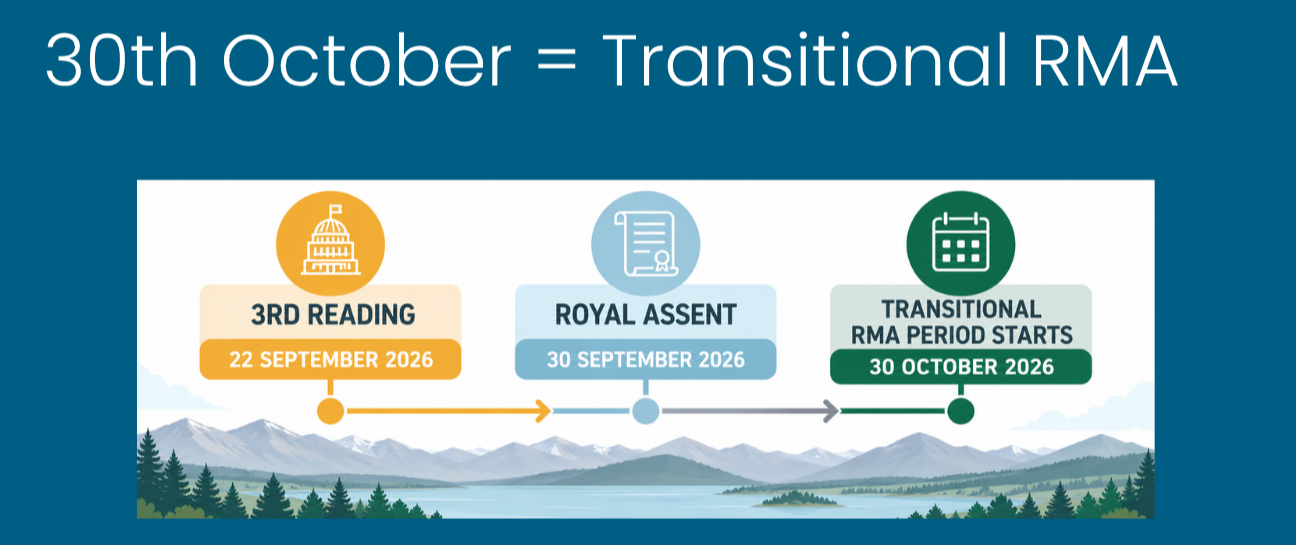
The bills now move through the next stages in Parliament:
• Second Reading.
• Committee of the Whole House, where further amendments are likely.
• Third Reading.
• Royal Assent.
The Government has indicated that it wants the legislation passed before the 2026 General Election, so it will move quickly from here, and more changes are still likely before that point. Once the legislation is enacted, implementation will unfold over several years, with the full transition expected to continue through to around 2031.
What should organisations be doing now?
There is still plenty of detail to come, but now is a sensible time to start thinking ahead.
That means:
• Reviewing projects that may be affected by the reforms.
• Keeping an eye on the development of national direction and environmental standards.
• Thinking through how the proposed changes may affect future developments, infrastructure projects and landholdings.
• Considering how regional spatial planning may shape long-term investment decisions.
We’ll keep you updated
These reforms represent the biggest change to New Zealand’s planning system in more than three decades.
We’ll keep following the legislation as it moves through Parliament, with a focus on what the changes actually mean in practice rather than just the headlines. Over the coming months, we’ll share regular updates on what is changing, what it means on the ground, and what people should be thinking about now.